|
|
|---|


Showing posts with label Paris. Show all posts
Showing posts with label Paris. Show all posts
I am so excited to have the incredibly talented and amazing author Laurel Corona as a guest on Paris Atelier today. She is one of my favorite authors and her talent is boundless! Laurel has just released Finding Emilie, this novel is beyond amazing. I just finished reading it today and I highly recommend it! I love everything about it, the details, the history, the elegance, everything French about it. Laurel has written some wonderful novels, Penelope's Daughter has long been another favorite of mine as well. A giant Thank you to Laurel COrona for this beautiful guest post! I hope you all enjoy it!
Atelier Paris Guest Blog Post
for
FINDING EMILIE
(Simon&Schuster/Gallery Books, April 2011)
Laurel Corona
Renaming Paris: The Place Royale and the Jardin de Roi
During the French Revolution and the Reign of Terror, Paris took on a new look. Gone were the statues of aristocrats and royals in the squares, gone even were the heads of many of the stone saints in Notre Dame and other churches. Gone too was the Bastille, the place most associated with the oppression of the past. Streets and buildings were renamed, and even the calendar was rewritten to celebrate the triumph of the people over the tyranny of the Ancien Régime.
Anything with the word “roi” or “royale” in it had to go, including two of the places most familiar to the heroine of my new novel, FINDING EMILIE. Lili, the daughter of the real-life mathematician and physicist Emilie du Châtelet, who died shortly after giving birth to her, grew up in one of the elegant townhouses lining what she knew as the Place Royale. At its center was a grand statue of Louis XIII, which was, as one might expect pulled down and melted for its bronze after the revolution. The square was renamed the Place de Vosges, and eventually, after the furor died down, a replacement statue was erected (an error in my book has it as a statue of Louis XIV--I hate it when that happens!)

Place de Vosges
The Place Royale, with its matching red-brick facades and vaulted arcades, was the model for future residential squares in Paris and other European cities. Meant to be a quiet and dignified place, then on the outskirts of Paris, for the well-to-do to live, it is still one of the most elegant spots in the city. Cafes look out on a tree-shaded square where in summer people lounge on park benches and picnickers play games on the grass. Turgot’s 1739 map of Paris shows what it looked like at the time my book is set, although the shade trees I include are a later addition.
Here’s the quick description I offer of this urban oasis in FINDING EMILIE:
The Place Royale, home to Hôtel Bercy, was one of the few places in Paris fit for a stroll. Even the gardens of the Tuileries were thick with the stench of garbage, and haunted by beggars and thieves. On dry and pleasant afternoons, those who lived behind the harmonious, arcaded mansions ringing the four sides of the Place Royale could leave behind the sedan chairs they used for calling on their neighbors elsewhere in town, and cross the quiet garden on foot.
Several key scenes occur in this garden, including Lili’s awakening to the cruel social realities of Parisian life, and the awakening of love between Lili’s best friend Delphine, with whom she was raised like a sister, and the future Comte d’Étoges.
For Lili, love blossoms on the other side of the Seine, at what was then known as the Jardin de Roi, today known as the Jardin des Plantes. The site looks quite different today, housing several museums and the Paris zoo along its perimeter. It retains vestiges of one of its primary purposes in the era before the revolution when my novel is set. It was the center of research into botany and zoology, and its head, George Louis LeClerc, the Comte de Buffon, was one of the most important scientific figures of his time.

Place Royale
The Jardin de Roi first appears in FINDING EMILIE when Lili is invited by the Comte de Buffon to spend an afternoon with him. In the greenhouse, Lili is astonished by a pale pink mantis, perfectly camouflaged on a stem of orchids, and the count explains, using evolutionary thinking he developed a century before Darwin.
“You see,” he said, taking Lili’s arm to go to the house for dinner. [...] “I don’t believe for a moment that God said during the creation, ‘Let there be orchids as well as mantises that look just like them.’ I believe instead that different types of plants and animals came into the world and thrived where they were put.”
The great man stopped for a moment once they had crossed the terrace in front of the greenhouse. They were standing in the middle of a grand walkway so long it disappeared from sight before reaching the end of the garden. Lost in thought, Buffon’s hands were clasped as he looked up at the plane trees lining the walk. Close to the house, gardeners trimmed the hedges of the formal garden, but farther away, the formal grounds meant for pleasant strolls gave way to the densely packed landscape of trees and medicinal plants in the working laboratory of the Jardin de Roi.

Jardin du Roi
“Things alter over time,” he said, picking up the subject as if his thoughts hadn’t strayed at all. [...] “The climate might get hotter or colder, or wetter or drier, and the perfect fit isn’t so perfect any more. So a plant might change colors or an animal grow spots, or more hair, or a tougher hide in order to adapt. Perhaps this poor little mantis was no good at capturing insects. He adapted to look like something the insects are attracted to, and voilà!”
Although broad expanses of lawn (forbidden to human feet) have replaced much of the formal gardens, strolling in the Jardin des Plantes today it is easy to get the feel for its former existence. A small garden of medicinal herbs honors its erstwhile scientific function, and promenades evoke a time when a walk here would have been the height of fashion. Just the place to put on a wig and panniers and pretend for a while--or maybe just get an ice cream and go to the zoo!
Thank you so much Laurel! Below are links to some of my favorite Laurel Corona books and the much anticipated and highly praised Finding Emilie.

Kashgar Travel Journal by Laura West ~ Reverie Daydream Artisan Boutique
Hello! I am so honored to be a guest on the most lovely blog Reverie Daydream today. If you have visited Reverie, then I'm sure you have been enchanted and mesmerized by the lovely Melissa and her magical world. I am truly humbled and honored to have been asked by her to guest on her series Wishful Thinking. Over the years Melissa's words have been a constant source of inspiration and her blog a special place to revive my soul.

Beloved Letterpress Card ~ Reverie Daydream Artisan Boutique
Melissa is the owner of Reverie Daydream an artisan boutique that offers beautiful, carefully crafted, ethically and environmentally conscious goods.
Thank you so much to Melissa for allowing me to share a tiny place on her blog and world.
Enjoy the post as well as the talented and wonderful bloggers in the Wishful Thinking series.

~~"Want to be an actor? Call Mr. Factor!" ~Original lyrics from the song Hooray for Hollywood~~

~This photo from the Hollywood Museum website *The lobby~
Hello! As usual, I have been missing you all! I am so excited about sharing this post with you. A few weeks ago I was fortunate enough to go to the Hollywood Museum with my Best Friend. I specifically wanted to go for a Jean Harlow exhibit that is on display there celebrating what would be her 100th birthday, little did I know what gold lies inside those doors. The museum is located in the historic Max Factor Building and I was awestruck from the moment I set foot in there!

The Max factor building is a gem that sits right off of Hollywood Blvd. just steps away from amazing places like the Roosevelt, El Capitan, and those famous footprints in the forecourt of Sid Grauman's Chinese theatre. Stepping through the heavily marbled entryway and into this historic building was like stepping back in time to the 1930's and that glorious Golden Age of Hollywood.

~The "Brownettes" Soft Peach colored room. Judy Garland is featured here~
The lobby is basically unchanged from those golden days. It is a polished Art Deco jewel, a rose colored oasis of endless lavish marble, crystal chandeliers, soft hues, and tropical palms. The Max Factor studio contains four special celebrity make-up rooms, each designed to bring out the best in women of a particular hair color: The first is marked "For Blondes Only" (and is done in shades of blue); another for redheads (in mint green), for brunettes (rose pink), and the brownettes (pale peach). These special rooms have been painstakingly preserved, and are complete with the original make-up chairs, lighting, furnishings, and multi-angled mirrors. They are also outfitted with display cases full of notable clients personal make-up and personal belongings. Some of the legendary clients featured are Marilyn Monroe, Judy Garland, Rudolph Valentino, Joan Crawford, Jean Harlow, Lucille Ball, Claudette Colbert, Norma Shearer, and Bette Davis. I was inches away from Joan Crawford's false eyelashes (used!) Marilyn Monroe's bustier, and Elizabeth Taylor's belongings.

Sitting in the makeup chair
It is said that Jean Harlow's hair was first dyed platinum in these rooms and that the color was created specifically for her, as is the story with Marilyn's hair, Joan Crawford, and Claudette Colbert.

One of Judy Garlands pairs of Ruby Red Slippers from the Wizard of Oz
I cannot even begin to scratch the surface of what this incredible museum contains and the history behind Mr. Factor and his empire. There are endless incredible pieces of Hollywood history here. The Marilyn Monroe collection alone is worth it. I am going to do a separate post just on her memorabilia at the museum tomorrow. They have a Mae West collection, Elvis items, Lucy and Desi, Shirley Temple, Clara Bow, Carey Grants Rolls Royce....Really it is endless! So, instead of boring you with more photos and my rambling I will leave you photo from the Jean Harlow exhibit I originally went to see. Until tomorrow! XOXO!

~~~All photos taken by me and property of Paris Atelier unless otherwise noted~~~

Via Ciaoeli Tumblr
Hello Lovelies! I have been aching for Paris this last week or so and the feeling just won't go away! Maybe because Spring is approaching and there is no place in the world more beautiful in the Springtime. Maybe because I have been brushing up on my French while teaching the little Little Prince to speak it...Maybe, it is because I left my heart there the last time I left. Whatever the reason, here is a tiny dose of Paris and some interesting little tidbits to tide us over.

Via Tumblr
~ In Paris you are never more that 400 meters from a subway station.
~ The Marseillaise, the French national anthem, was first sung in Strasbourg, not Marseille.
~ The novel La Disparition by Georges Perec, in its original French does not use the letter 'e'.

~Via Tumblr~
~ In French two weeks is in fact 15 days, quinze jours.
~ French politicians can simultaneously hold more than one elected office.
~ Lefevre is the most popular last name in France.
~ There are 27 wine regions in France.

~Via Tumblr~
~ Comté cheese is best eaten 30 months after it is made.
~ Alsacien type homes are not considered immobilier, the French term for real estate that also means non-moveable, but in fact mobilier because they are demountable and thus can be moved. Alsacien type homes were built this way so that homes could be part of dowries.

Flickr
"Fred Astaire: Here's to the beautiful ladies, Here's to those wonderful girls, Adele's and Molly's, Lucille's and Polly's. You'll find them all at the Ziegfeld Follies."

Cyd Charisse in the 1945 Hollywood musical ~ Ziegfeld Follies
Bonjour chéris! I just finished watching that amazing movie Ziegfeld Follies. I am still trying to catch my breath! The costumes, the dance routines, the stars...Oh my!

Dolores Costello ~ Ziegfeld Girl
The Ziegfeld Follies were a series of elaborate theatrical productions, inspired by the Folies Bergéres of Paris, on Broadway in from 1907 through 1931.

Ziegfeld Girl
The Follies were extremely lavish revues that included many of the days most popular performers. The Follies may have been most known for the beautiful girls that graced the stage.

Lilyan Tashman ~ Ziegfeld Girl
These girls were known for always being decked out in the most elaborate and beautiful costumes. The costumes were often made by designers such as Erté, Lady Duff Gordon, and Ben Ali Haggi. The next morning the talk of New York would always be the ensembles.

The glorious Louise Brooks ~ She was a featured dancer for the Follies in 1925
I love that the movie includes some actual numbers from the original Follies shows on Broadway and showcases so many of Hollywood's brightest stars of the time. It is such an over the top spectacle that it just makes you feel like dancing!
Stay tuned for an incredible giveaway in the next few weeks and a post about my first trip to an auction & the goodies I brought home. I can't wait!

~Cherry Blue Corset~
Maya Hansen Corsetry has won my heart! What girl (or guy) wouldn't love these confections?

~Calippo Corset~
Madrid born Maya Hansen dreamt up this incredible cake collection. Cakes and candies inspired this frivolous and whimsical collection. Colorful brocades and supple suede combine to make an incredible statement. A colorful bang of trimmings and patterns that evoke the fantastical and lavish court of Versailles.


~The Marie Antoinette~
I dream of a Lingerie closet full of the most decadent and beautiful pieces...Just like these. A little piece of heaven!

~Mint & Chocolate Corset~
HappyValentine's Day!
All images via Maya Hansen Corsetry

"In Florence, Jeanne Lanvin gazed, transfixed, upon a Fra Angelico fresco. Its remarkably intense quattrocento Blue was to become her pet shade" ~Lanvin

~Lanvin 2011~
Jeanne Lanvin set up a Milliners boutique on the corner of rue Boissy D'Anglas and rue Du Faubourg St Honoré. She later opened her own House at the same location.
She began by making beautiful little fashions for her young daughter and muse, Marguerite Marie Blanche. These creations became so popular among the parents of her daughters friends, Jeanne created a Childrens department in 1908 and a year later became a full fledged fashion house.

~Lanvin Pearl and Grosgrain Necklace Via Harvey Nichols~
In 1911 Lanvin began creating wedding gowns and in 1926 she created Lanvin Fourrure and Lanvin Lingerie. The same year she was also named Chevalier of the Légion d'Honneur.
In 1946 Jeanne Lanvin passed away after starting the perfume and Lanvin Decoration departments with great success (Santa left me a little vintage Lanvin present under the tree this year ~sigh~)
Today, Alber Elbaz is the art director for the House of Lanvin and he is pure genius! I look forward to every feminine collection and the details are always exquisite.

A bit of vintage Lanvin for you~ A Gold embroidered Lanvin-Castillo dress modeled in the Theatre of Louis the XV in Versailles.
Best Wishes to you all for a happy, joyful, and successful New Year~ Cheers!

I adore this photo but have no idea where it is from...If it is yours, please let me know!
I'm thinking of doing a week of my favorite designers. Not surprisingly, three out of the four are French! The first is a bit of dreamy Chanel to kick off this glorious holiday week.
I am in LOVE with these little Chanel booties, I have the perfect vintage Dior cocktail dress to wear with them (am I the only one that selects the shoes and then builds the outfit?)

Chanel
Oh my, oh my!!! This is too stunning! I'm not really one to wear brooches, however, I can surely find a spot for this little lovely! Perhaps I can tuck it into a messy bun, thread it through a shoe strap, or secure a scarf with it. Hmmm...

Paris Parfait
Tulle, Aqua, quilted strappy wedges...This can only be a Chanel vitrine in Paris! What a dream.

Elena Glurdjidze, dancing The Dying Swan for Lagerfeld during her final fitting at Chanel
I think I have posted this image before, but it is just too gorgeous. It combines my love of ballet and my love of Karl Lagerfeld...perfection.

Chanel
Finally, for all of you out there in the middle of a storm a Chanel umbrella. It has been raining for days here in Southern California and I love it! I love that the rain waters the plants and cleans the roads. I love the sound of the rain and the snuggling near the fireplace. Try to stay dry while out there shopping and prepping for this special weekend!
À la prochaine
If I can't have too many truffles, I'll do without truffles.
Sidonie Gabrielle Colette
Sidonie Gabrielle Colette

Bonjour mes amis, what a chaotic and busy time it has been. I love to grab a great book and a cup of tea to unwid a bit in the evenings when the baby is asleep and the husband has gone to bed. Lately, I have found myself immersed in novels by that racy and saucy author Colette (Best known for writing Gigi).
I just finished reading a number of the Claudine books, I'm starting Chéri when I finish this post, and I can't wait to get my hands on La Naissance du Jour. I find myself getting lost in this Belle Epoque world she writes about so vividly and so wonderfully! It makes me even more excited to know that she wrote about personal experiences and the people around her so these amazing, larger than life characters could have at one point been living, breathing, people.
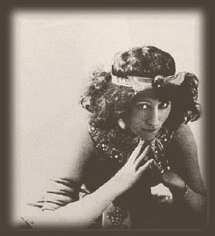
Her life was very racy and very interesting. Her marriages and lovers were often scandalous and salacious. A woman before her time and a wonderful writer.
You will do foolish things, but do them with enthusiasm.
Sidonie Gabrielle Colette
Sidonie Gabrielle Colette

Blue Silk Ballgown and Red SIlk womens stockings, with Gold thread embroidery
Bonjour Mes Amis! Recently I wrote a post (here) about visiting the new Resnick Pavilion in Los Angeles for the opening weekend. I was in awe of all of the beauty and history surrounding me. It was a spectacular experience and I am so excited to share these pics with you.

Edwardian Lace dress and kidskin gloves/A stunning uncut pattern on Silk
The first of the three exhibits that we visited was this amazing journey through time, "Fashioning Fashion" European dress through the ages. I cannot tell you just how incredible these items were in person.

L. Blue Mademoiselles Giroux Dress c. 1880 made in LImoges France made in the Princess Line, named after Princess Alexandria of Whales.
This stunning display exhibits European Dress from 1700~1915. All of the very most romantic eras are represented here and one could get lost in the glamour and the romance of it all.

I apologize for the hefty amout of photos in this post, I had a really hard time editing some out. I have loads more but decided to spare you! My best friend had my camera so I took these with my phone but you just can't hide the fact that the fashion was divine!

Fashion from some of the most famous and luxurious fashion houses and designers in history are on display: The House of Rouff, Émile Pingat, Giroux, and so many more. The above Pink gown is from the 1830's and is decorated with a sea of faux pearls that would weigh down the sheer overlay and make a delightful clinking noise when the lucky wearer would move. The faux pearls are glass filled with a mixture of fish scales and glue. The story behind this is remarkable, I could do an entire post over the discovery of this process by a French rosary maker.


I wish I could write about each of these pieces, however, I think I would both bore you and take hours to write. Each piece has a truly remarkable history and the process of creating these works of art are incredible.

The contents of these Silk~Velvet lined boxes are amazing! The larger box contains jeweled buttons for a mens suit from the 1700's, the missing ones are on display on the suit next to this box. The smaller boxes contain jeweled shoe buckles! If I could only just hold one for a moment! Too beautiful!!!

I have been holding back writing that "this photo is my favorite"because it feels like they all are but I really do think this one is my favorite. Those bustles are fantastic and the colors! Oh my!

18th century Robe à la Française. Cream Silk with Handpainted details. The colorful florals are woven in to the fabric but the Green/Yellow leaves and bows are handpainted. Just amazing!

The thing that struck me most about everysingle piece I saw was the detail, the hadmade aspect of everything, the fact that every pleat, bead, ruffle, and delicious piece of golden passementerie, has been perfectly placed is mind blowing. Seeing gowns and suits worn at the most luxurious courts in Europe was a special and treasured treat. The true luxury of the textiles, lush trimmings, and artistry of each piece is intoxicating.
 All of these pieces and so much more (a vest from the Revolution in France, children's clothing, capes lined in ostrich feathers, etc) are currently on display at LACMA in Los Angeles until March.
 All Photos ~ Paris Atelier
Photo~SwankUnderpinnings on Etsy
Bonjour! Sending out wonderful wishes for a beautiful weekend to YOU all!

Image via Bubble Wrap My Heart
I plan on stealing away a moment to read a good book...

Image Via Tumblr
and kick off my shoes! Happy weekend!!!!
I have two exciting posts in the wings! Stay tuned!!!
Subscribe to:
Posts (Atom)